Gum Recession: What Causes It and How It’s Treated
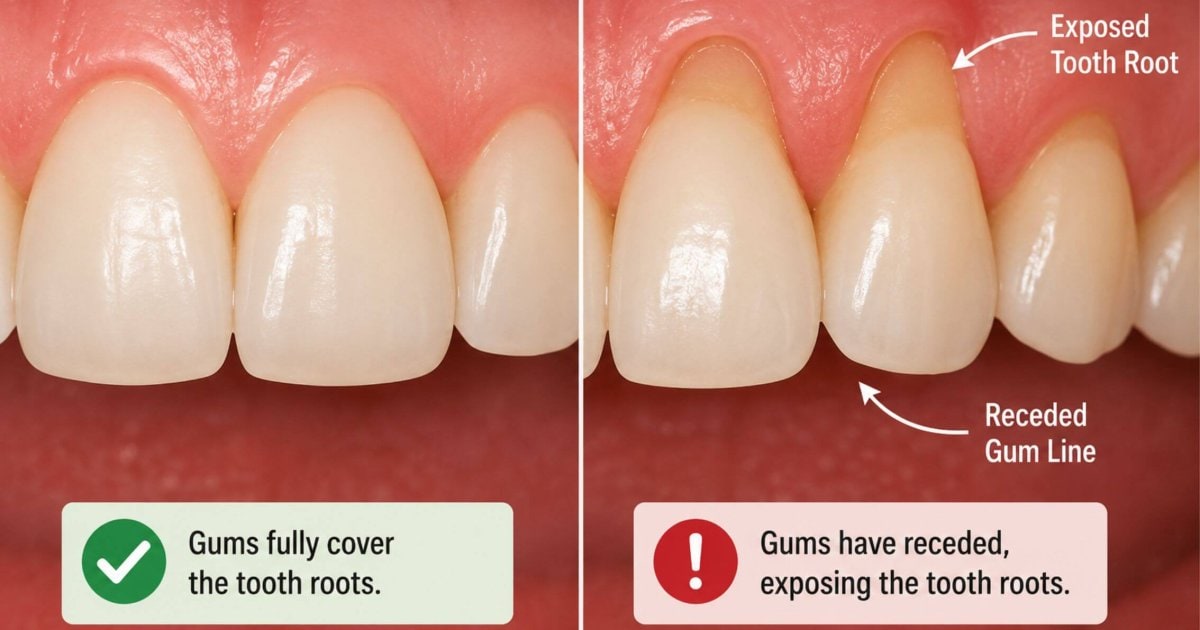
Gum recession is one of those conditions that tends to creep up slowly. There’s no sudden moment where something feels dramatically wrong — just a gradual shift that many people don’t notice until their teeth look longer than they used to, or until sensitivity to hot and cold becomes hard to ignore. By the time most patients mention it at a check-up, the recession has often been developing for months or years.
Understanding what’s behind it — and what can be done — is the first step toward stopping it from getting worse.
What Is Gum Recession?
Gum recession means the gums have pulled back from the teeth, exposing more of the tooth and sometimes the root. Since the root lacks a protective enamel layer, it can become sensitive and is more prone to cavities.
Recession doesn’t reverse on its own. Once gum tissue is lost, it doesn’t grow back without intervention.
What Causes Gum Recession?
There’s rarely a single cause. In most cases, recession develops from a combination of factors — some behavioural, some structural, some systemic.
Aggressive brushing
Brushing with too much pressure or using a medium- or hard-bristled toothbrush gradually wears away gum tissue over time. The damage accumulates slowly — which is why patients who have always brushed “thoroughly” are sometimes surprised to hear that their technique is the problem.
Gum disease
One of the most common causes of gum recession is periodontal disease, especially in people over 40. As the bacterial infection destroys the tissue and bone supporting the teeth, the gums pull back.
Unlike recession caused by brushing, gum-disease-related recession often affects multiple teeth simultaneously and is accompanied by other signs — bleeding, swelling, bad breath, or loose teeth.
Teeth grinding and clenching.
Bruxism places excessive stress on the teeth and supporting structures. Over time, this pressure contributes to gum recession, particularly in patients who grind their teeth at night and are unaware of it.
A worn bite, morning jaw soreness, or cracked teeth are often the first indicators.
Genetics
Some people are more predisposed to thin or fragile gum tissue. Even with excellent oral hygiene and no gum disease, genetically thin gums are more likely to recede — particularly in areas where teeth are positioned toward the outer edge of the jaw.
Smoking
The chemicals in tobacco reduce blood circulation to the gums, limiting the delivery of oxygen and nutrients needed for healing. It also greatly increases your risk of gum disease and recession, and treatment may not work as well as it does for non-smokers.
Hormonal changes
Fluctuations in hormones during pregnancy, puberty, or menopause can make gum tissue more sensitive and reactive to plaque. This increases the risk of inflammation and, over time, recession.
Tooth position
Teeth that sit outside the natural arch of the jaw — a common result of crowding — often have thinner bone and gum coverage on the outer surface, making recession more likely in those areas regardless of hygiene habits.
Symptoms and Early Signs
Because recession develops gradually, the early signs are easy to attribute to something else or overlook. The most common indicators include:
- Tooth sensitivity — particularly to cold drinks, cold air, or sweet foods. This is often the first symptom patients notice.
- Teeth that look longer — as the gumline drops, more of the tooth becomes visible.
- A visible root surface — the area below the natural gumline looks different in colour and texture to the enamel above it. It may appear more yellow or feel rougher.
- A notch at the gumline — a small indent or groove where the gum meets the tooth, sometimes felt with the tongue before it’s visible.
- Increased spacing between teeth — as gum tissue recedes, the gaps near the gumline become more apparent.
If you’ve noticed any of these, it’s worth having your gums assessed rather than waiting to see whether it progresses further.
Why You Shouldn’t Leave It Untreated
Gum recession isn’t just a cosmetic concern. The exposed root surface is significantly more vulnerable to decay than enamel. Root cavities develop faster, are harder to treat, and in advanced cases can threaten the viability of the tooth. Sensitivity that starts as occasional discomfort can become persistent and affect eating, drinking, and daily comfort.
In cases where recession is driven by underlying gum disease, bone loss continues alongside tissue loss. As the supporting structures deteriorate, teeth can become loose and eventually require extraction.
Treatment Options
Treatment depends on what’s causing the gum recession and how severe it is. In mild cases, the focus is on stopping further loss. In more advanced cases, surgery to restore lost tissue may be recommended.
Correcting brushing technique
Switching to a soft-bristled toothbrush and relearning the technique won’t reverse existing recession, but it will stop it from worsening. Your Cardiff dentist or oral health therapist can provide personalised instruction on optimal brushing technique, including appropriate brush angulation and brushing force.
Scale and clean
If plaque and tartar buildup along or below the gumline is driving inflammation and recession, a professional scale and clean removes the deposits that home brushing can’t reach. When the gum disease is more advanced, the gum is scaled, and the roots are planed to help prevent reattachment of the bacteria.
Antibiotic therapy
If there is bacterial infection, antibiotics can be added to scaling and root planing. This can be delivered as a topical gel applied directly to the gum pockets, or as a short course of oral antibiotics, depending on the extent of the infection.
Gum graft surgery
A gum graft is the best method for replacing lost tissue when recession has exposed a considerable portion of the root or when sensitivity has been a problem for an extended period. The process includes the removal of a small piece of tissue (usually from the top of the mouth) and the grafting onto the area of recession.
This covers the exposed root, reduces sensitivity, and stops further recession in that area. Most patients return to normal eating within a week or two.
Your Cardiff dentist will assess which combination of treatments is appropriate based on the cause of the recession, how far it has progressed, and which teeth are affected.
Frequently Asked Questions
Can gums that are receding regrow on their own?
No. Once gum tissue has receded, it doesn’t regenerate without treatment. What can be done is to stop further recession through improved home care and professional treatment, and to restore lost tissue through gum graft surgery where indicated.
Is gum recession painful?
Not always. The most common symptom is sensitivity rather than pain. In some cases, patients have significant recession with no discomfort at all, which is why regular check-ups are important for catching it early.
How do I know if I’m brushing too hard?
Fraying bristles on a toothbrush that’s less than three months old is a reliable indicator. So is recession that’s most noticeable on the outer surfaces of the teeth — the side facing the cheek. A pressure-sensor-equipped electric toothbrush can help.
What does a gum graft procedure involve?
A gum graft is carried out under local anaesthetic. A small amount of tissue is taken from the palate and sutured to the area of recession. The area heals over a few weeks. Most patients manage discomfort with standard over-the-counter pain relief and find the recovery more straightforward than they expected.
Does gum recession affect all ages?
It’s more common in adults, but it can affect younger patients — particularly those with aggressive brushing habits, thin gum tissue, or orthodontic treatment that has moved teeth outside the natural arch.
Gum Treatments in Cardiff
If you’ve noticed sensitivity, longer-looking teeth, or visible root surfaces, it’s worth getting your gums assessed sooner rather than later.
Call us on (02) 4954 6888 or book online.
You’ll find us at 30 Veronica Street, Cardiff. We see patients from Cardiff, Charlestown, Warners Bay, Belmont, and across Lake Macquarie.