Why Do Teeth Turn Yellow — and Can You Reverse It?
Yellow teeth are among the most common cosmetic concerns patients raise — and among the most misunderstood. The assumption is usually that it comes down to hygiene, but the reality is more nuanced.
Some yellowing is reversible. Some isn’t. And the difference between the two determines what will actually help.
Why Teeth Yellow in the First Place
Tooth colour is determined by two layers working together: the outer enamel, which is naturally off-white, and the inner dentine, which is naturally yellow. As enamel thins or stains accumulate on its surface, the dentine underneath becomes more visible — and the tooth looks yellower.
Yellowing falls into two distinct categories, and the distinction matters for treatment.
Extrinsic staining — surface level
This is the most common type and the most responsive to treatment. Stains form on or within the outer enamel layer due to:
- Coffee and tea — tannins bind to enamel and leave yellow-brown deposits over time
- Red wine — high in both tannins and chromogens, the pigment compounds that adhere to enamel
- Smoking and tobacco — nicotine and tar produce some of the most stubborn surface stains
- Dark-coloured foods — soy sauce, tomato-based sauces, berries, and similar foods all contribute
- Poor oral hygiene — plaque and tartar buildup create a yellow coating that brushing alone can’t remove once it hardens
Intrinsic discolouration — within the tooth
This type originates within the tooth structure and doesn’t respond to surface whitening treatment. Causes include:
- Ageing — enamel thins naturally over time, making the yellow dentine beneath progressively more visible.
- Childhood antibiotic use — certain antibiotics taken during tooth development can cause grey-brown banding within the tooth structure.
- Fluorosis — excessive fluoride during enamel development causes white spots or brownish patches
- Trauma — a knocked or damaged tooth can darken as the internal tissue responds to injury
- Certain medicines — antihistamines, blood pressure medicines, and others can contribute to intrinsic discolouration.
- Amalgam restorations — silver fillings can cast a grey shadow through the surrounding tooth over time
Genetics and enamel thickness
Some people have naturally thinner enamel or more yellow dentine. This is a baseline characteristic that whitening can improve but not eliminate.
Can Yellow Teeth Be Reversed?
It depends on the cause.
Extrinsic staining can be significantly reduced. A professional clean removes hardened tartar and surface deposits, and whitening treatment addresses staining within the enamel itself. For most patients with diet or habit-related yellowing, results are noticeable.
Intrinsic discolouration is more resistant. Whitening can lighten teeth with age-related dentine yellowing — often with good results.
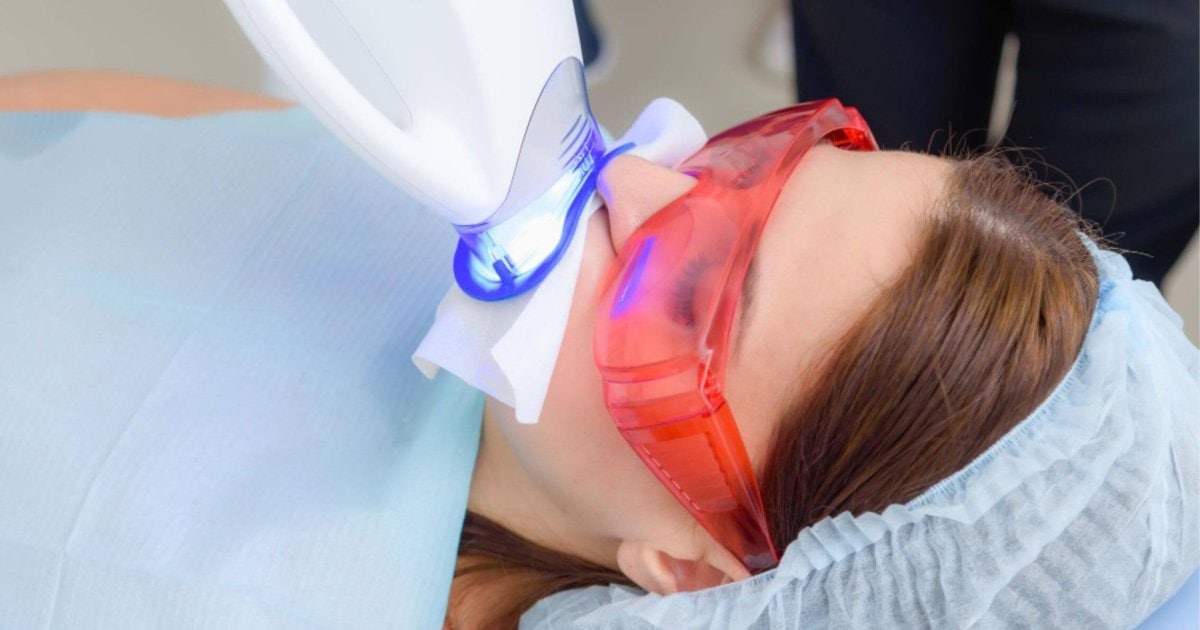
Fluorosis, trauma-related darkening, discolouration from childhood antibiotic use, and amalgam-related shadowing respond poorly to bleaching. For these cases, veneers or bonding are more appropriate options.
What Helps at Home
Home care won’t reverse significant yellowing, but it slows the rate of staining and maintains results after professional treatment.
Whitening toothpaste
Works through mild abrasives and, in some formulations, low-concentration peroxide or blue covarine — an optical whitening pigment. Reduces surface staining with consistent use but doesn’t change the underlying tooth colour.
Brushing timing
Brushing within 30 minutes of consuming staining foods or drinks — before pigments set — reduces their impact. Rinsing with water immediately after consuming acidic or staining drinks helps too.
Avoid brushing immediately after acidic foods — enamel is temporarily softened and more vulnerable to abrasion.
Reducing staining habits
If you enjoy coffee, tea, or red wine—or use tobacco—you’re more likely to develop stains on the outside of your teeth over time. Reducing frequency rather than eliminating them is a realistic approach for most people.
Using a straw for cold drinks limits contact between staining liquids and tooth surfaces.
Regular professional cleans
A scale and clean removes hardened tartar that home brushing can’t shift. It’s often the first step before whitening — clearing the surface layer so that bleaching can work directly on the enamel.
Professional Whitening at Cardiff Dental
We offer two whitening options depending on your preference and how quickly you want results.
Professional take-home whitening
Impressions are used to create custom-fitted whitening trays. The trays evenly distribute the whitening gel across the tooth surfaces and minimise gum contact.
Worn for two hours a day, results are typically visible within one to two weeks. The trays can be reused for top-up treatments as needed.
LED in-chair whitening
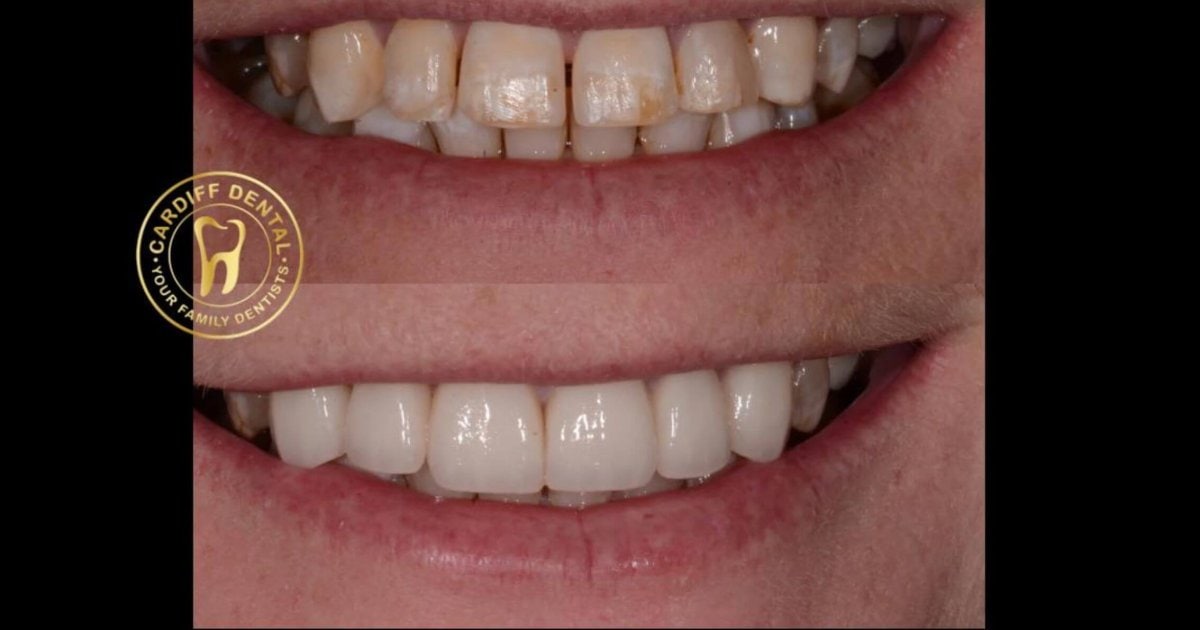
Carried out at the practice in one to two hours. A dental professional first applies a protective barrier to the gums, then places the whitening gel on the teeth and activates it with an LED light.
The concentration used in-chair is higher than take-home products, producing more immediate results in a single session.
Both treatments use professional whitening gels containing hydrogen peroxide or carbamide peroxide. These ingredients work beneath the surface of the teeth to break down the compounds responsible for staining. This is what makes them effective on intrinsic staining that surface products can’t reach.
Worth noting: teeth whitening doesn’t change the colour of existing restorations — crowns, veneers, bonding, and fillings stay the same shade. If you have visible restorations, your Cardiff dentist will factor this into the treatment plan.
Frequently Asked Questions
Does teeth whitening damage enamel?
Professional teeth whitening, when carried out as directed, doesn’t damage enamel. The bleaching agents temporarily open the enamel’s pores to break down staining, after which the enamel remineralises. Sensitivity during or after treatment is common but temporary.
Why are my teeth yellow even though I brush every day?
Brushing removes plaque and some surface debris but doesn’t remove intrinsic discolouration, hardened tartar, or staining from ageing and diet. The cause needs to be identified — a professional clean followed by an assessment will clarify what’s driving the yellowing and what will address it.
How long do whitening results last?
Typically one to three years, depending on diet and habits. Coffee, tea, red wine, and tobacco accelerate re-staining. Top-up treatments using existing custom trays extend results without starting from scratch.
Can all yellow teeth be whitened?
Not all discolouration responds to bleaching. Extrinsic staining and age-related dentine yellowing respond well to treatment. Discolouration from childhood antibiotic use, fluorosis, trauma-related darkening, and amalgam shadowing are more resistant — veneers or composite bonding may be more suitable in these situations. A dental assessment will clarify what’s achievable.
Is over-the-counter whitening worth trying?
For mild surface staining, yes — as a starting point. OTC strips and gels use lower concentrations than professional products and produce more limited results. They won’t address intrinsic discolouration or match the outcome of a professionally fitted custom tray or in-chair treatment.
Teeth Whitening in Cardiff
If you’re unsure what’s causing your teeth to yellow or want to know which whitening option suits you, a quick assessment is the best starting point.
At Cardiff Dental, we see patients from Cardiff, Charlestown, Warners Bay, Belmont, and across Lake Macquarie.
Call us on (02) 4954 6888 or book online.
You’ll find us at 30 Veronica Street, Cardiff.