
Dry Socket After Wisdom Teeth Removal: Prevention, Symptoms and Treatment
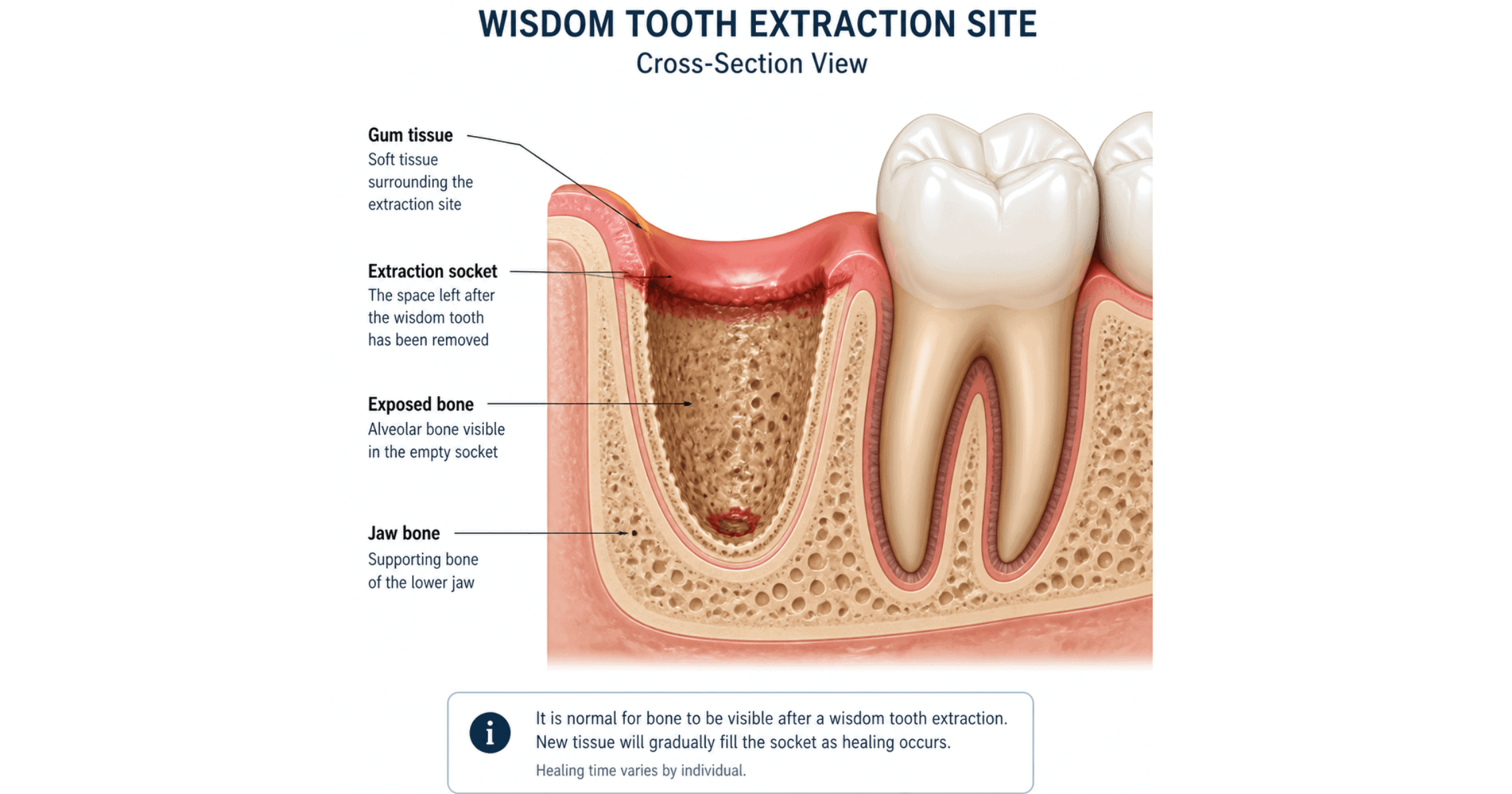
Most people expect some soreness after wisdom teeth removal. What they don’t expect is the pain getting dramatically worse on day three or four — just when it should be easing up. That sharp, throbbing pain that radiates toward your ear or temple isn’t normal healing. It’s likely a dry socket, one of the most common complications following tooth extraction.
The good news: it’s treatable and, with the right aftercare, largely preventable.
What Is Dry Socket?
Once the tooth is taken out, a clot forms to protect the socket. That clot is essential—it protects the exposed bone and nerves beneath while the site heals. Dry socket occurs when that clot is dislodged, dissolves prematurely, or fails to form properly, leaving bone and nerve tissue exposed to air, food, and bacteria.
It’s the most common complication following wisdom teeth removal, affecting roughly 2–5% of extractions. That number climbs for wisdom teeth specifically, where the anatomy and blood supply make maintaining clot stability harder.
Dry socket isn’t an infection, but it can feel just as severe — and, if left unmanaged, can significantly slow healing.
Symptoms of Dry Socket
The clearest signal is pain that worsens rather than improves. Most post-extraction discomfort peaks in the first 24–48 hours and then gradually resolves. With dry socket, you’ll typically notice the opposite: a significant increase in pain around days three to four.
What does dry socket look like and feel like?
- Severe, throbbing pain that radiates toward the ear, eye, or temple on the same side
- A visible empty socket — you may be able to see bone where a clot should be
- A lasting unpleasant taste in the mouth or ongoing bad breath
- Pain that isn’t adequately controlled by standard over-the-counter pain relief
If you’re experiencing these dry socket symptoms, don’t wait it out. Contact your Cardiff dentist promptly — the discomfort associated with dry socket can be significant, and treatment brings relief quickly.

What Causes Dry Socket?
When the blood clot is disrupted, a dry socket can occur. Several factors contribute to this:
Mechanical disruption
Suction, pressure, and physical disturbance are the most common culprits. Drinking through a straw, spitting forcefully, or smoking all create negative pressure in the mouth, which may dislodge the blood clot before it stabilises.
Smoking
This is one of the most significant risk factors. By restricting blood flow to gum tissue, nicotine can impair the body’s ability to form and maintain a stable clot. Inhaling also creates suction. Both factors work against you.
Hormonal contraceptives
Research suggests that oestrogen from hormonal contraceptives may interfere with clot formation. If you’re on the pill, discuss timing of extractions with your dentist — scheduling procedures during the low-oestrogen phase of the cycle may reduce risk.
Poor blood supply or pre-existing factors
People with certain health conditions, those who have experienced dry socket before, or those whose extraction site is in an area with limited blood supply are at higher risk.
Bacteria at the extraction site
An existing infection before extraction can also increase the likelihood of clot failure.
How to Prevent Dry Socket
Most cases of dry socket are preventable with consistent aftercare. The critical period is the first 72 hours following extraction.
Avoid anything that creates suction or pressure.
No straws, no smoking, no vaping, and no forceful spitting for at least 72 hours — longer if possible. This is non-negotiable for protecting the clot.
Don’t rinse aggressively on day one.
For the first 24 hours, keep rinsing gently and sparingly. You can then use warm saltwater rinses (prepare warm water in a glass with 1/2 tsp of salt) to gently clean the area without disturbing the clot.
Follow your aftercare instructions precisely.
Your Cardiff dentist will provide specific guidance following your extraction. Those instructions are tailored to your situation — follow them as given, rather than substituting advice from online forums.
Have soft foods and try to chew on the other side.
Avoid anything hard, crunchy, or chewy near the extraction site. Soft foods reduce the chance of physically disturbing the socket during the healing window.
Avoid alcohol and carbonated drinks.
Each can interfere with healing and increase the risk of clotting.
Wisdom teeth dry socket is common enough to take seriously, but uncommon enough that most patients who follow their aftercare carefully won’t experience it.
Treatment If You Get Dry Socket
If dry socket occurs, don’t try to manage it at home in the long term. The treatment is straightforward, and you’ll feel significantly better once it’s been addressed.
What your dentist will do:
Your dentist will first gently clean the socket to remove any debris or bacteria. They’ll then pack the socket with a medicated dressing — typically one containing eugenol (clove oil), which has natural anaesthetic properties. This dressing protects the exposed bone and nerves, reducing pain substantially within hours of application.
Most patients require one to three dressing changes over the following week. The dressing is replaced as the socket begins to heal, and the site is reassessed with each change.
Pain management
In addition to the dressing, your dentist may recommend a short course of pain relief. Over-the-counter options are often sufficient once the dressing is in place.
Healing timeline
With treatment, dry socket typically resolves within 7–10 days. Without treatment, the pain can persist for several weeks and the risk of secondary infection increases.
If you suspect a dry socket, contact your dental practice as soon as possible. Don’t wait to see if it improves on its own — it generally won’t without intervention.
Frequently Asked Questions About Dry Socket
How do I know if I have a dry socket?
The main sign is pain that worsens around days three to four after extraction, rather than improving. You may also notice visible bone in the socket, a foul taste, or pain radiating toward your ear. If that sounds familiar, call your dentist.
Can a dry socket heal on its own?
Technically, yes — but it can take several weeks, and the pain throughout that period is typically severe. Treatment speeds healing significantly and provides much faster relief. It’s not worth waiting out.
How long does a dry socket last?
Untreated, dry socket can persist for two to three weeks. With proper treatment — medicated dressings and follow-up — most cases resolve within 7–10 days of starting care.
Does everyone who gets a wisdom tooth removed get dry socket?
No. Dry socket occurs in roughly 2–5% of tooth extractions. The risk is higher for lower wisdom teeth and for people who smoke, but most patients who follow their aftercare instructions won’t experience it.
Can a dry socket happen weeks after extraction?
It’s uncommon, but early-stage dry socket can occasionally be missed or develop a few days later than typical. True late-onset dry socket (two or more weeks post-extraction) is rare. If you have ongoing pain well after an extraction, it’s worth having the site checked — the cause may be different.
What does dry socket look like?
A healthy extraction socket will have a dark clot visible inside it. A dry socket looks like an empty hole — you may see a whitish or yellowed bone at the base, with no protective clot covering it.
Wisdom Tooth Removal in Cardiff
If you’re recovering from a wisdom tooth extraction and something doesn’t feel right, don’t ignore it. Dry socket is very treatable, and the sooner it’s addressed, the faster you’ll feel better.
At Cardiff Dental, we support patients through every stage of their extraction recovery — from pre-procedure preparation to follow-up care. We also see patients from nearby areas, including Charlestown, Warners Bay, Belmont, and Lake Macquarie.
Call us on (02) 4954 6888 or book your appointment online. Visit us at 30 Veronica Street, Cardiff.